JAMSTEC
The TrenchJAMSTEC is the Japanese marine-science organization at the center of the UNIS deployment in the Mariana Trench, a project that begins as seismic monitoring and becomes entangled with commercial pressure, a disputed submersible loss, and an international intelligence operation. Its contract gives the Tanaka Oceanographic Institute a reason to return to the abyss, but the later revelation that the project also served as a legitimate pretext for Benedict Singer to enter the Trench makes JAMSTEC’s role more consequential than its scientific brief first suggests.
The UNIS project and the return to the Trench
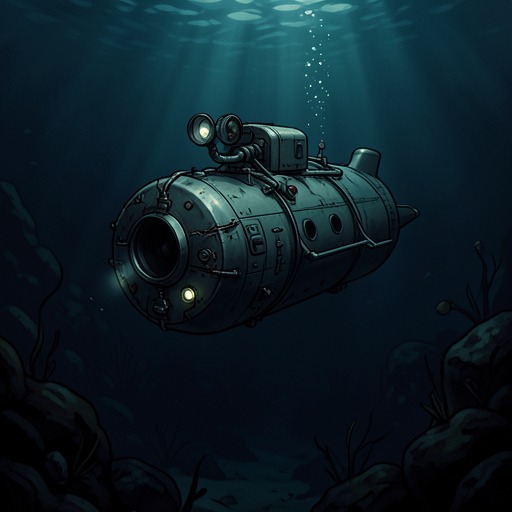
JAMSTEC first enters the story through the deployment of Unmanned Nautical Information Submersibles, or UNIS robots, along the floor of the Mariana Trench. The project is a joint venture with the Japanese government, and its stated purpose is to monitor seismic activity. When several instruments malfunction, Masao Tanaka needs Jonas Taylor to retrieve one. Masao is also building an artificial lagoon off the Monterey coast to study whales, and the undersea contract is meant to help finance that work. For Jonas, the request is a possible return to deep-sea piloting after years away; he initially refuses because of his fear of the Trench, but the prospect of redemption becomes difficult to resist as his first marriage deteriorates and his career remains in disarray.
The first expedition’s failure has a longer institutional cost. Following a court case over the deaths associated with the Megalodon, the Tanaka Oceanographic Institute is ordered to pay damages beyond what it can bear. When the courts reject its appeals, the Institute goes bankrupt. JAMSTEC then offers it a way out: a lucrative new contract to place an entire array of UNIS robots along the trench floor. The reason given is concern about increasing seismic activity along the Philippine and Pacific tectonic plates. The work offers the Institute a chance to keep its doors open, but fulfilling it requires Masao to seek outside resources and surrender control of the organization he founded.
A contract reshaped by the Proteus accident
The new contract binds JAMSTEC’s scientific requirements to events aboard Geo-Tech Industries’ deep-sea fleet. Masao forms a partnership with Benedict Singer, who has the resources to pursue the work, and gives up a controlling interest in the Institute. Once the Proteus is lost, however, JAMSTEC insists that the Institute conduct its own investigation. It specifically asks Jonas to board the Goliath and examine the sonar records. Masao warns that failure to deliver a timely report will lead to termination of the UNIS contract, making the investigation a direct threat to the Institute’s renewed financial prospects.
The loss also disrupts the project’s schedule. Without the Proteus, the Prometheus and Epimetheus must complete their geological survey before the UNIS detectors can be deployed in the Trench. Benedict acknowledges that the delay will more than double the timetable, while Masao maintains that a full account of the accident is necessary. The pressure is therefore not simply bureaucratic: the requested investigation competes with the expedition’s effort to continue, and the organization’s contract gives the findings immediate commercial and operational consequences.
Terry Tanaka-Taylor’s report to JAMSTEC becomes a pivotal point in that conflict. Her draft claims that the sonar records show no other vessels or predatory life-forms before the Proteus lost hull integrity, and attributes the accident to piloting error, possibly after the starboard bow plane struck a black smoker. It also states that Geo-Tech has begun restitution for the four victims’ surviving families and asks that UNIS deployment continue. Terry knows the report is untrue and sends it because she believes it is the only way Benedict will let her leave the ship. The report is not merely an assessment of the accident: it offers JAMSTEC an official account that closes the matter on terms favorable to the expedition.
The report as a point of institutional pressure
The demand for an investigation has a second significance once the characters discuss what disclosure could trigger. Terry recognizes that if JAMSTEC suspected the Proteus crew had been killed by undiscovered life-forms, the information would have to reach American authorities; a further investigation could delay the mission for months. Benedict understands the same consequence and challenges her over whether she will change her report. In this exchange, the report’s omissions become as consequential as its stated conclusions. JAMSTEC is the recipient of the findings, but the urgency surrounding them arises from what a truthful account might compel beyond the organization itself.
The project also imposes a personal deadline on Terry. She tells Heath Williams that her father and JAMSTEC know she is in the Trench, and that if her report does not arrive within two weeks the project will be shut down. That expectation gives the reporting process practical force even while she is trapped aboard the Benthos. Heath advises her to complete the report and then speak to Benedict about joining him aboard the Prometheus, underscoring how the institutional task is interwoven with Terry’s effort to find a safer position on the expedition. The evidence does not establish whether JAMSTEC ultimately accepts her account or terminates the contract; it shows the threat as a pressure shaping decisions aboard ship.
A scientific project used as cover
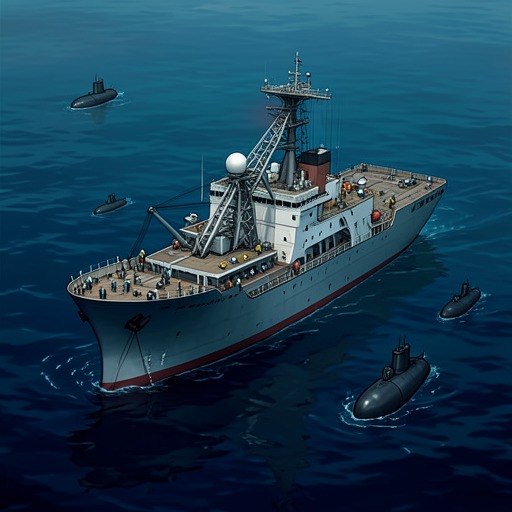
A later explanation reveals that JAMSTEC’s contract had also been useful to intelligence services tracking Benedict. Commander Adams explains that the United States feared Geo-Tech might move the Benthos into international waters and enter the Mariana Trench without detection. Mossad informants learned that Benedict was seeking a scientific expedition that would give him a legitimate reason to enter the Trench, with the Goliath following the Benthos at the surface as a safety precaution. Ross says that the UNIS project appeared to provide the needed opportunity. The scientific work thus made the expedition legible as a lawful mission while also enabling surveillance of Benedict’s fleet.
The revelation reaches back to the Tanaka Institute’s financial crisis. Masao realizes that the lawsuits, the exceptional damages, and the denied appeal had been used to make the Institute desperate enough to accept help. Ross confirms that the pressure was deliberate: the plan depended on the lucrative JAMSTEC contract drawing Masao to Benedict, the only person with resources to complete the project and rescue the Institute financially. The lawsuits were real, but the institution’s vulnerability was exploited to make the purchase and partnership attractive. JAMSTEC’s work was not described as fabricated; rather, its genuine project became a vehicle through which the intelligence operation could place Benedict’s expedition under observation.
Consequences and limits of JAMSTEC’s role
The investigation requirement was also intended to provide a means of forcing Benedict out of the Trench before he found manganese nodules containing a valuable fusion fuel source. Ross explains that the intelligence operation hoped JAMSTEC’s inquiry into the Proteus accident would bring the expedition to a halt. That plan fails when Terry sends a favorable report on Geo-Tech’s activity, while Jonas unknowingly reveals the secret location of the dive site to Celeste Singer. By the time the intelligence officers explain the scheme, the Benthos is heading toward the nodules and they believe they can no longer stop it by administrative pressure alone.
JAMSTEC therefore occupies several connected positions in the novel: it commissions seismic-monitoring work, sustains the financially endangered Tanaka Oceanographic Institute, demands an account of a fatal accident, and supplies a credible public purpose that others exploit. The organization’s reporting deadline can threaten the contract, but a report’s content can also protect the expedition from scrutiny. Its project is scientific in stated purpose and genuine in its operational demands, yet it becomes part of a larger struggle over access to the Trench and its resources. The resulting irony is that the same institutional process meant to investigate danger is used as leverage to manage who may continue exploring—and, through Terry’s misleading report, may instead help the expedition proceed.